
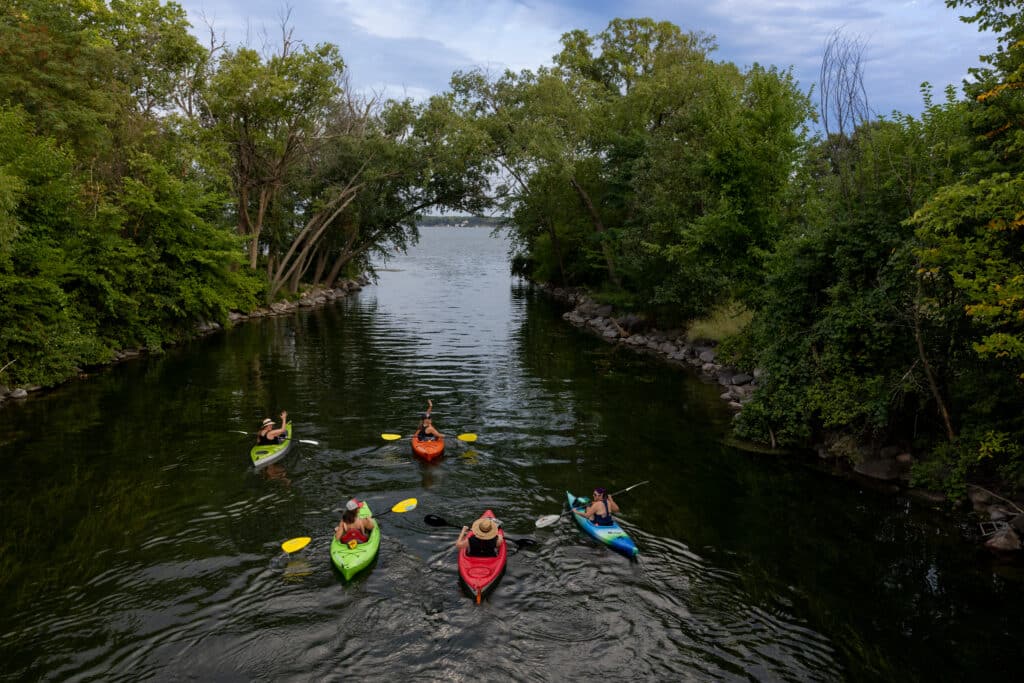
A city guided by its powerful conservation roots
With its five lakes, 307 parks and 200+ miles of scenic trails, Madison, Wisconsin offers endless ways to step outside. But underneath, there’s a deeper conservation story that shapes how people live, work and explore here.
The birthplace of American conservation
Madison greets outdoor writers with a landscape shaped by a conservation legacy that continues to define its character. This is a place shaped by giants: Just up the road in Baraboo, conservation pioneer and former University of Wisconsin–Madison professor Aldo Leopold penned the 1949 classic, A Sand County Almanac, laying the foundation for modern conservation ethics. Leopold lived, taught and worked in Madison, leaving an indelible mark on the city.
John Muir, father of the U.S. National Park System, spent his formative years exploring Madison’s lakes and woods, experiences that were key to his growth as a naturalist. Muir studied at the UW in the early 1860s and lived in North Hall, with a window that looked out at a forested tract, later named Muir Woods.
Former U.S. Senator and Wisconsin Governor Gaylord Nelson is credited as the founder of Earth Day on April 22, 1970. This was the same year the UW’s Nelson Institute for Environmental Studies — a leader in interdisciplinary environmental research and education — was founded. He also helped advance legislation to build a nationwide hiking trail network, notably the Appalachian National Scenic Trail.
The legacy of these conservation giants still pulses through Madison — its 200+ miles of hiking and biking trails, winding waterways, green-minded citizens and commitment to ecological stewardship — and offers visiting writers a chance to immerse themselves in a place where environmental history and destination resiliency meet.
Itinerary Ideas:
- Plan a visit to Curtis Prairie, the world’s first restored prairie and part of the ecological restoration program Leopold designed at the UW Arboretum, which remains an important research site for plants, soil and wildlife.
- Explore exhibits, programs and trails that embody Leopold’s land ethic at the Aldo Leopold Nature Center or take a short drive northwest to The Leopold Center in Baraboo.
- Find inspiration on a walk through Muir Woods, visiting the less-traveled trails to the west.
- Get in touch with the Nelson Institute for connections to their deep network of subject matter experts like Tia Nelson—conservationist, environmental education advocate and daughter of the late Senator Gaylord Nelson.
Teejop or “Four Lakes”
For the Ho-Chunk people, whose ancestral land encompasses the Teejop region, Lake Mendota, its shores and neighboring waters hold deep cultural significance. Thousands of Ho-Chunk effigy mounds—the largest concentration in the U.S.—were built along the shores of Madison’s lakes. There are 200 effigy mounds in Madison, including the largest bird effigy mound in the world. The area has yielded several remarkable archaeological discoveries, including 1,200‑ and 4,500‑year‑old dugout canoes, the oldest ever recovered in the Great Lakes.
Itinerary Idea:
Book the award-winning First Nations Cultural Landscape Tour, available upon advanced online request. This walking tour provides an introduction to the 12,000+ years of human history along Lake Mendota’s shorelines, with an emphasis on the history of the Ho-Chunk Nation. The tour takes visitors through the UW campus highlighting culturally significant locations including the double-tailed water spirit burial mound near Agricultural Hall, Bascom Hill and more.
Science on the lakes
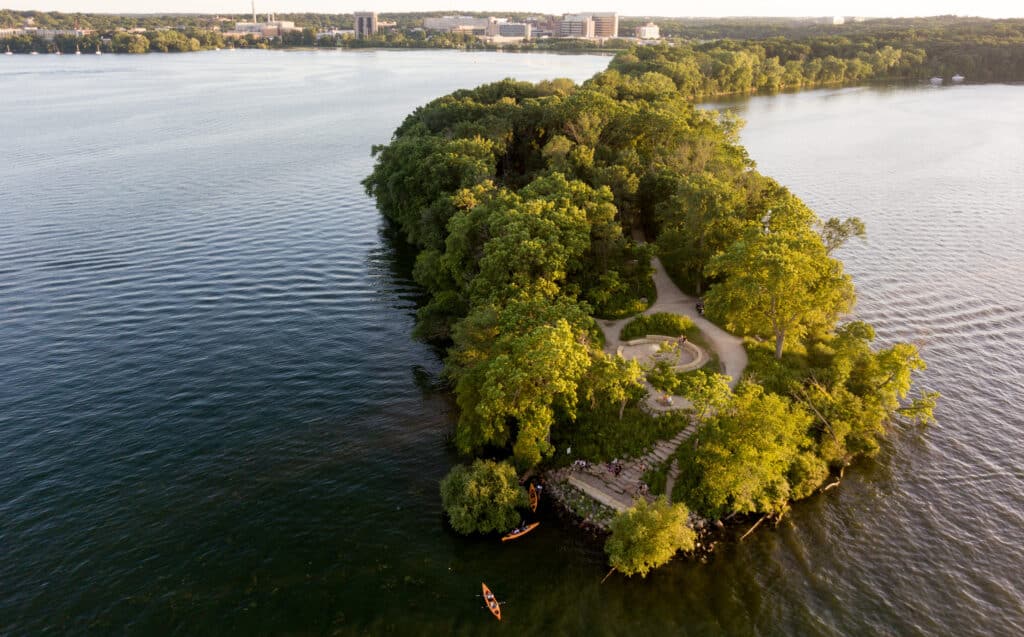
Lake Mendota, the largest of Madison’s five lakes, is the most studied lake in the world. In fact, the discipline of limnology (the study of the biological, chemical and physical features of lakes and other bodies of fresh water) was founded in the 1890s at UW–Madison. The Center for Limnology is a global leader in the field, offering research programs in limnology, aquatic ecology, fisheries and ecosystem science. The Center houses the limnology library and the Hasler Laboratory for Limnology, a working laboratory where research has taken place for over 120 years.
Itinerary Ideas:
- Profile limnologists, ecologists, UW faculty and researchers whose work is shaping the next century of conservation.
- Join world leading freshwater scientists and researchers on a water expedition.
- Enjoy a peaceful paddle on the lakes by renting equipment or booking a private group experience at Outdoor UW on the lower level of Memorial Union.
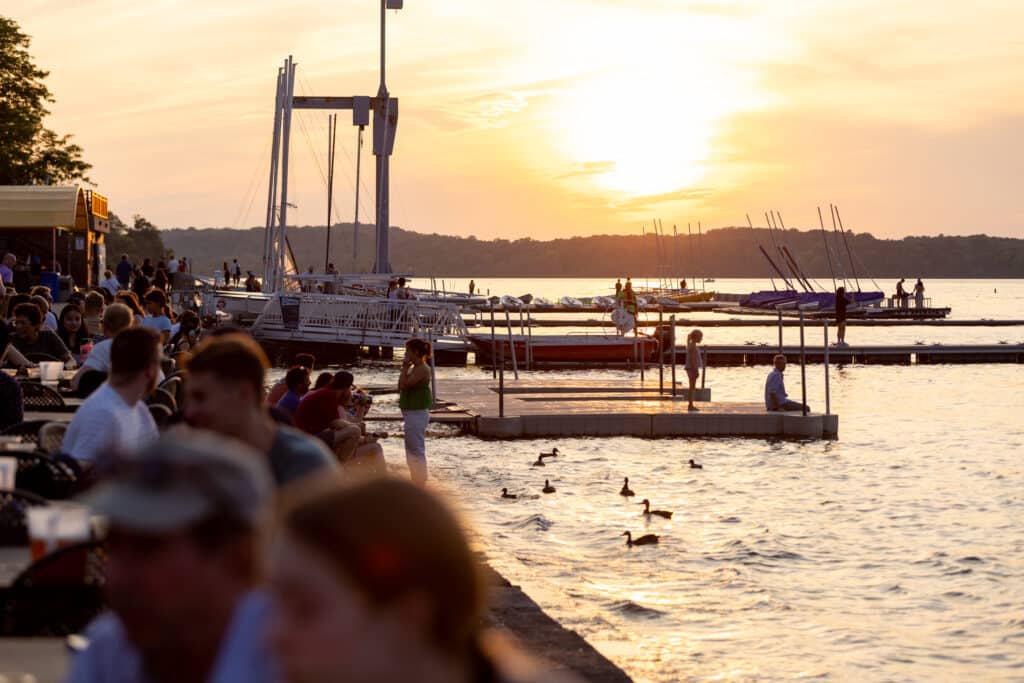
- Cap your adventures at Memorial Union Terrace with a local pint of Spotted Cow or a scoop of Babcock ice cream made on campus.
Green Practices
Fun fact: Madison launched the nation’s first municipal curbside recycling program in 1968. In addition to pioneering curbside recycling, the city of Madison has embedded sustainability into everyday civic life. It is one of only five Platinum-Level Bike-Friendly Communities in the U.S., recognized by the League of American Bicyclists for its low‑stress, all‑ages and all-abilities bike network. The city received global recognition by Destination Think’s 100 Travel Innovations for its modernization initiatives that help decrease the carbon footprint of travelers.
Madison is also home to Dane County Farmers’ Market, the largest producer-only farmers’ market in the nation. It’s not uncommon to spot the city’s top chefs shopping the market early Saturday mornings, eager to infuse local flavors and just-picked ingredients into their seasonal dishes.
Itinerary Ideas:
- Book reservations at Graze, a farm-to-table restaurant on the Capitol Square whose menu reflects seasonal ingredients sourced from the region’s farms and producers.
- Rent an electric BCycle from one of the 100+ stations located throughout the city.
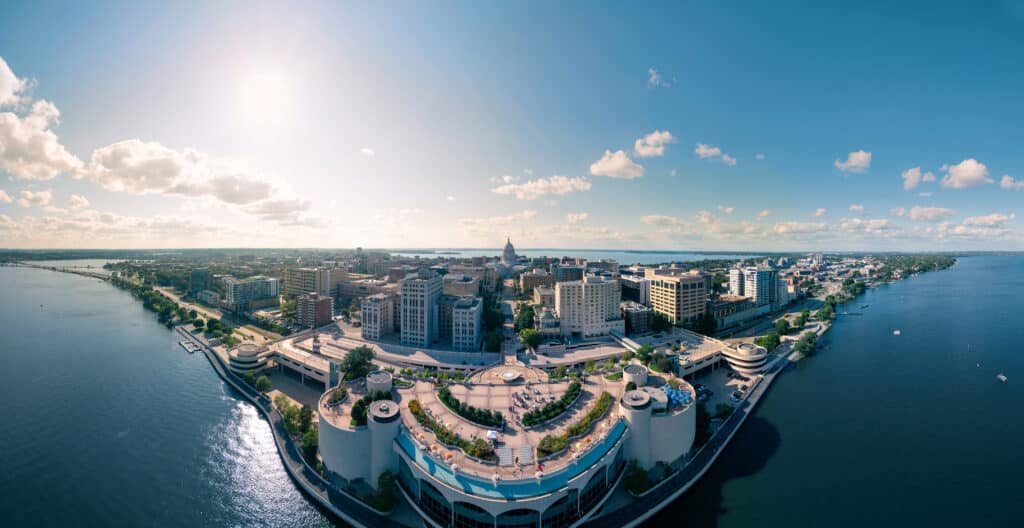
- Take the Monona Terrace bike elevator down to the Lake Monona Bike Loop, a scenic, 13-mile paved trail with lake views, unique architecture and connections to larger trail systems.
- Don’t leave without trying Stella’s hot and spicy cheese bread, a staple at the Saturday farmers’ market on the Square.
REGISTER NOW to Celebrate 100 Years of OWAA!
OWAA is kicking off our 100th anniversary celebrations by heading to the midwestern outdoor mecca of Madison, Wisconsin! Save the dates of August 22-24, 2026 (and leave room for some pre- and post-tours too) and plan to join us in The Badger State. The core conference activities will be held in the Monona Terrace Community and Convention Center.
First, how are we going to kick off the celebration of our 100th year? We will:
- Have a 1920’s themed closing event (our awards night) where attendees are encouraged to dress in period clothing
- Recreate the menu (as best we can) that our founders signed when they decided to found OWAA in 1927
- Exhibit display cases with our own historical artifacts, along with those of our members and perhaps some local outdoor gear from that time period
- Present 100 fun facts about OWAA on our social media, starting after our 99th birthday on April 9th
- And share various fascinating historical blog posts, a press kit, branded ‘merch’, a new webpage about the anniversary and more!
About Madison:
This capital city is a haven for outdoor enthusiasts, offering five lakes, 307 parks and 200+ miles of scenic hiking and biking trails, plus access to the Ice Age National Scenic Trail and stunning Driftless region. Madison is nationally recognized for its outdoor recreation and culture:
- Gold Rated for Walkability (Walk Friendly Communities)
- 1 of only 5 Platinum-Level Bike-Friendly Communities in the U.S. (League of American Bicyclists)
- #8 Greenest City in the U.S. (EcoCation, 2024)
What else makes this destination so unique? Thousands of Ho-Chunk effigy mounds—the largest concentration in the U.S.—were built along the shores of Madison’s lakes. Approximately 200 remain present, offering a profound connection to Indigenous history and storytelling. Just a short drive away in Baraboo, conservation pioneer and former UW–Madison professor Aldo Leopold penned A Sand County Almanac, laying the foundation for modern conservation ethics. John Muir, father of the U.S. National Park System, spent his formative years exploring Madison’s lakes and woods, experiences that were key to his growth as a naturalist.
Together, these threads of cultural heritage, ecological thought and natural beauty weave Madison into a uniquely powerful setting for outdoor writers to learn, gather and be inspired.
We are so excited to be the host of the 2026 Outdoor Writers Association of America Conference. We are thrilled to welcome attendees from around the world to the one-of-a-kind destination experience Madison has to offer. We hope you enjoy your stay!