
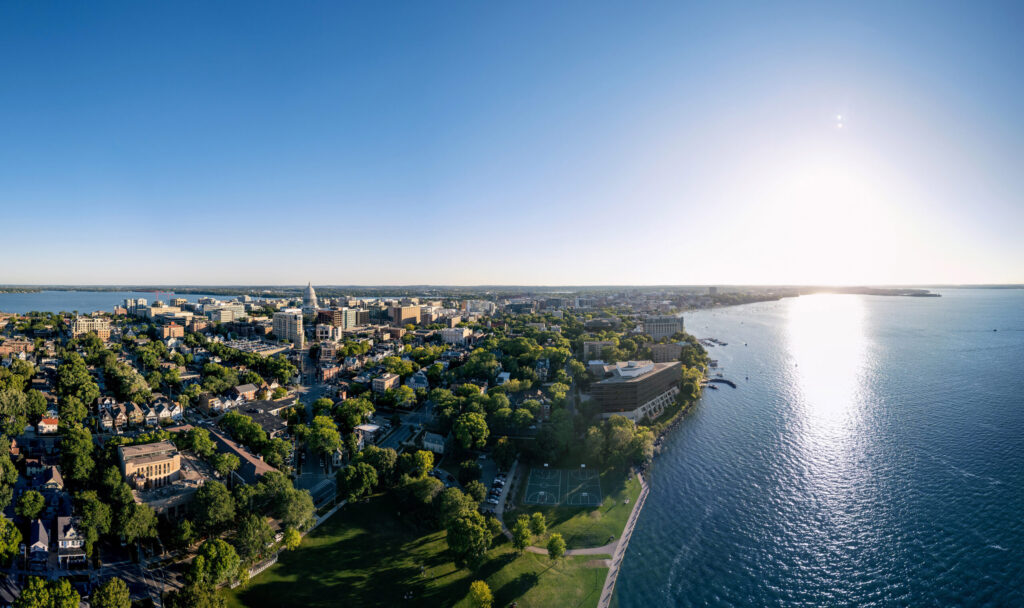
We’re kicking off our 100th anniversary celebrations by heading to the midwestern outdoor mecca of Madison, Wisconsin! Save the dates of August 22-24, 2026 (and leave room for some pre- and post-tours too) and plan to join us in The Badger State for the Outdoor Writers Association annual conference. The core conference activities will be held in the Monona Terrace Community and Convention Center.
For OWAA members seeking stories that blend wildlife, conservation and community, southern Wisconsin (particularly the Greater Madison area) offers an exceptional birding landscape rich with narrative potential. Situated within the Mississippi Flyway and shaped by water, prairie, forest and urban green space, this region supports hundreds of bird species throughout the year, making it a fertile destination for reporting across all seasons.
“Birds connect people to nature,” says Kaitlin Svabek, Director of Communications at Southern Wisconsin Bird Alliance (SoWBA). “Those who love birds want to protect them and their habitats, and that care flows outward to other wildlife, native plants and entire ecosystems.” That intersection between passion, place and protection is at the heart of birding stories here.Visitors to Madison don’t have to travel far—or rise especially early—to spot some of Wisconsin’s most familiar birds. Northern Cardinals are a year-round favorite, bringing bright flashes of red to backyards, city parks and woodland edges, even in winter. American Robins, Wisconsin’s state bird, are among the first signs of spring, often seen hopping across lawns in search of worms. Birders can also expect to see Black-capped Chickadees and Blue Jays at feeders, American Goldfinches flitting through open areas and Mourning Doves perched along fence lines. Thanks to the region’s mix of lakes, neighborhoods and green spaces, these beloved species make birding easy for beginners and seasoned birders alike.
A year-round cast of characters
Birding in southern Wisconsin is also defined by seasonal shifts, each bringing its own drama. Some species, such as Bald Eagles and Great Horned Owls, remain year-round, offering reliable subjects through winter and into the breeding season.
Spring migration typically begins as early as February, when melting ice opens the lakes and wetlands to large flocks of arriving waterfowl. In May, migration reaches its peak. The spring season delivers some of the most colorful and diverse birdlife of the year, including dozens of warbler species, orioles and tanagers. Some move quickly north toward boreal forests, while others, like Yellow Warblers, Common Yellowthroats or Baltimore Orioles, remain to nest locally.
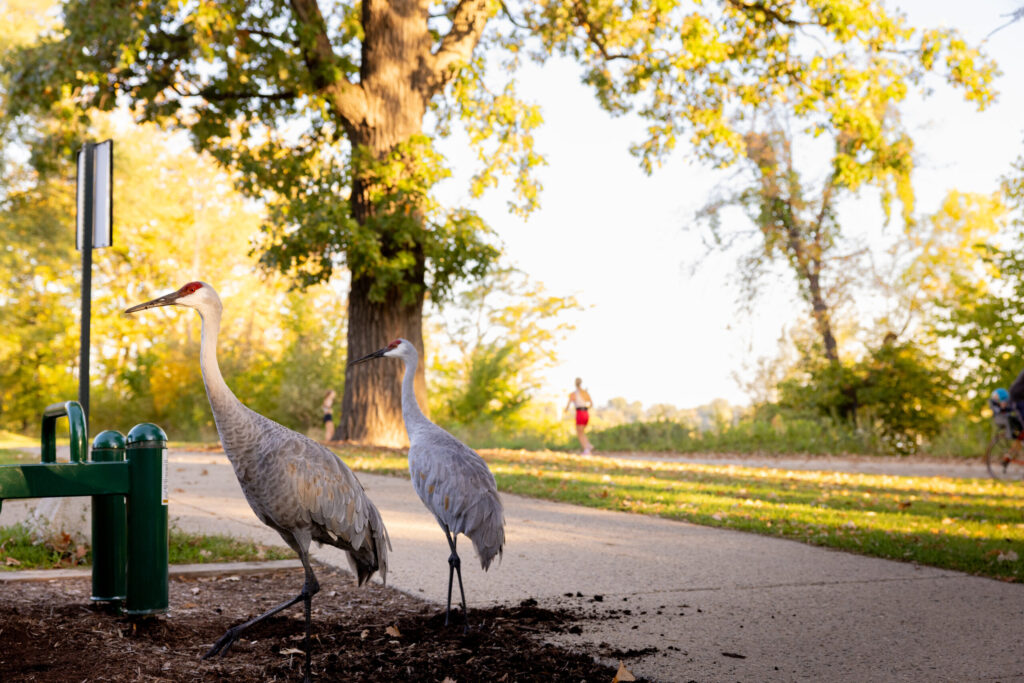
Among spring’s signature scenes are the American Woodcock’s sky dance and the annual return of Sandhill Cranes. The latter is tracked through the Midwest Crane Count, a collaborative monitoring effort highlighting both conservation success and ongoing stewardship.
Summer brings breeding activity and a spotlight on grassland birds, one of the most threatened groups in North America. Bobolinks, Dickcissels, meadowlarks and kestrels can be found in restored and protected prairies throughout the region. “Spring into summer is a great time to really understand how the habitat restoration work of local conservation organizations directly supports birds,” Svabek notes.
Fall migration begins earlier than people might expect, with some shorebirds departing as early as July. Though often described as subtler than spring, fall offers its own unforgettable spectacles. Chimney Swifts, for example, roost by the thousands in Madison, swirling through the evening sky before funneling into a single chimney for the night. Some of the largest counts in the Midwest occur here as the birds begin their journey to South America.
Later in the season, Sandhill Cranes gather again, this time staging in large flocks before heading south. Meanwhile, geese, ducks and swans pass through as northern waters freeze. Swans may appear in the hundreds, or even thousands, at sites such as Goose Pond Sanctuary or lakes Mendota and Monona (which create the Downtown Madison isthmus).
Winter birding brings surprises as well: Rough-legged Hawks, sparrows, longspurs—and occasionally Snowy Owls or irruptive finches (like crossbills)—reward persistent observers willing to brave the cold.
Accessible laces and an inclusive culture
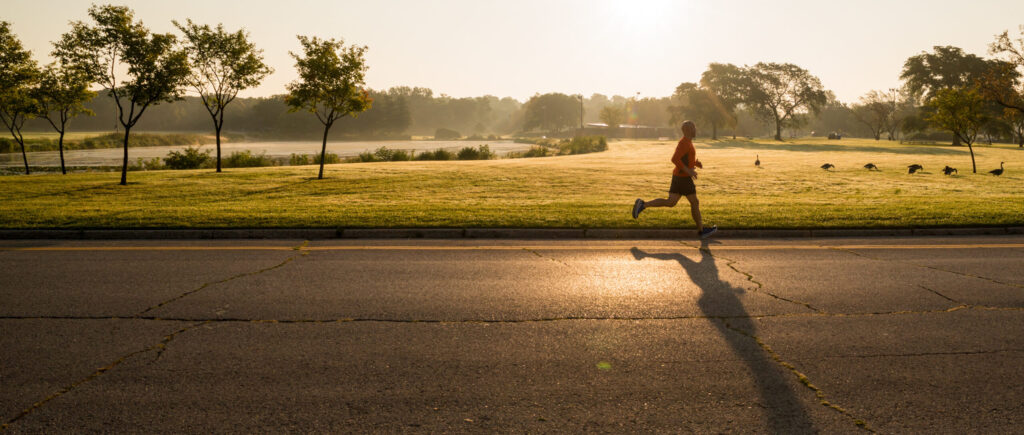
One of the most surprising aspects of birding in Madison may be how accessible it is. Birding doesn’t require travel to remote wilderness. Backyards, neighborhoods, city parks and even bus-line-adjacent green spaces like Tenney, Warner and Hoyt Parks provide excellent opportunities to observe activity.
Beyond the city, SoWBA sanctuary lands such as Goose Pond, Faville Grove, Fair Meadows, Hillside Prairie and Otsego Marsh offer immersive habitat diversity. Other standout sites include Pheasant Branch Conservancy, the University of Wisconsin–Madison Arboretum, Lunney Lake Farm County Park, Holy Wisdom Monastery, Cherokee Marsh and the UW–Madison Lakeshore Nature Preserve.
Equally important is the region’s welcoming birding community. Alongside well-established clubs are newer groups such as the BIPOC Birding Club of Wisconsin and Feminist Bird Club–Madison, helping ensure birding is inclusive and accessible.
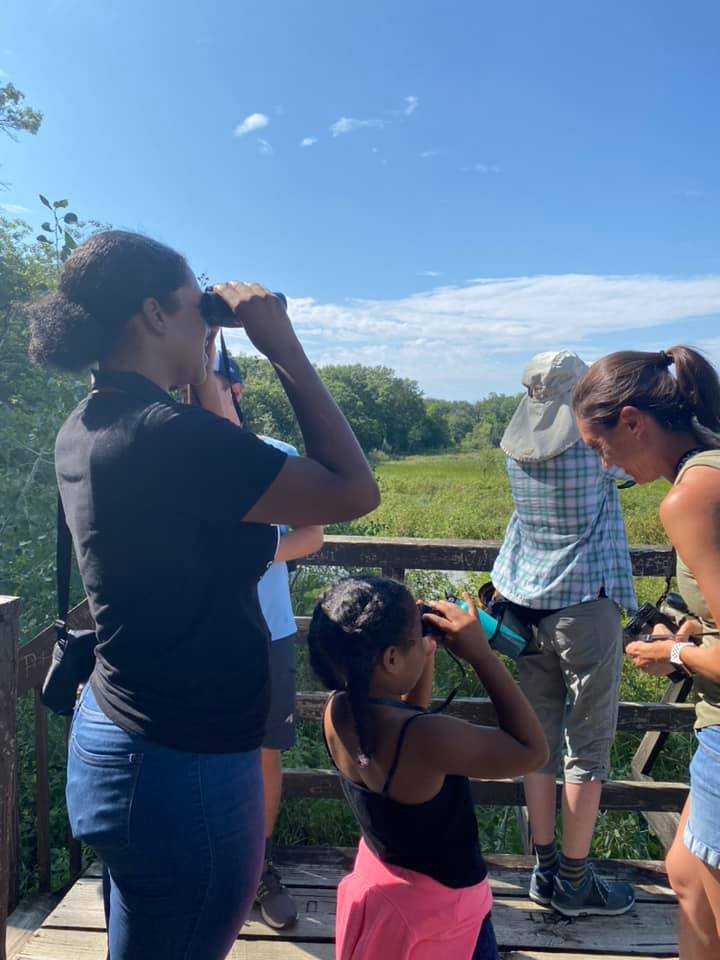
“If I’m being honest, I started birding by accident!” said member and Madison resident, Jasmine Banks. “I was listening to Madison podcast Black Oxygen with guest Dexter Patterson, Co-Founder of the BIPOC Birding Club of Wisconsin. His love of birds, nature and the outdoors was so contagious that, when the interview was over, I found the next event they were hosting and attended with my daughter and granddaughter … and I’ve been hooked ever since. In addition to the birds, the people and nature that keep me coming back—it’s the community! It is beyond welcoming to everyone, no matter if they are a new, seasoned or lifetime birder. All are welcomed and appreciated.”
Birding as conservation and community science
Southern Wisconsin’s birding culture is inseparable from conservation. The region has a deep legacy tied to Aldo Leopold and “A Sand County Almanac,” hosting numerous conservation organizations focused on land protection and habitat restoration.
This birding story also extends beyond the field and into global conservation through the presence of the International Crane Foundation in nearby Baraboo. The organization is the world’s leading authority on crane research and protection, working on every continent where cranes exist. For writers, the foundation provides an uncommon narrative bridge between local birds like Sandhill Cranes, whose seasonal movements are a defining spectacle in the region, and international conservation efforts aimed at safeguarding some of the world’s most endangered species. The result is a rare opportunity to tell stories that begin in Wisconsin wetlands and expand outward to a global stage.
SoWBA traces its roots back to 1935 (originally the Madison Bird Club) and is now both a bird conservation organization and a nationally accredited land trust. In addition to land stewardship, SoWBA and partners engage birders as community scientists. Platforms like eBird allow participants to document when, where and how many birds they encounter. This data helps researchers track population changes and unusual occurrences.
Large-scale initiatives such as the Christmas Bird Count, Great Backyard Bird Count, NestWatch, FeederWatch and Global Big Days coexist with regional efforts like SoWBA’s Bald Eagle Nest Watch, and Kestrel Nest Box Monitoring and Banding programs.
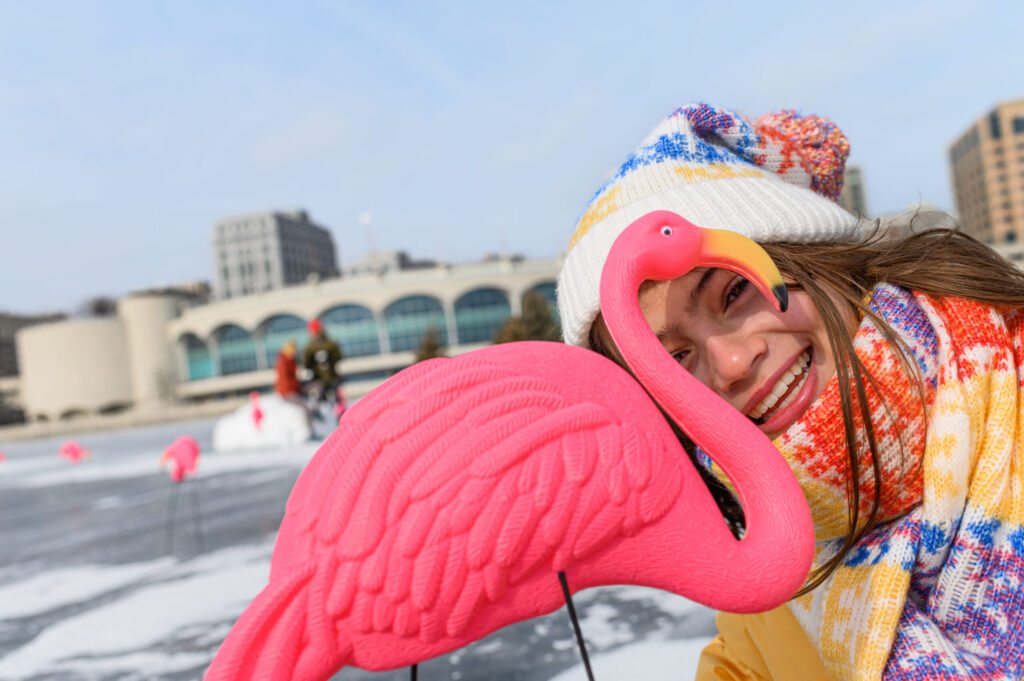
At the same time, Madison’s relationship with birds includes a playful and unmistakably local tradition: the plastic pink flamingo, which was officially designated as the city bird by the Madison Common Council in 2009. Originally adopted during a UW–Madison student prank in the 1970s, the plastic pink flamingo has become a lasting cultural symbol—one that reflects Madison’s bold personality and affection for public art, humor and civic identity. Its presence alongside the region’s very real birdlife underscores a recurring theme for writers: in Madison, birds are not just wildlife to observe, but characters embedded in storytelling and shared sense of community.
“Birding really is for everyone—no matter who you are or where you are from,” Svabek says. “Our birding community works hard to make sure people feel welcome, whether they’re longtime birders or just noticing birds for the first time.”