
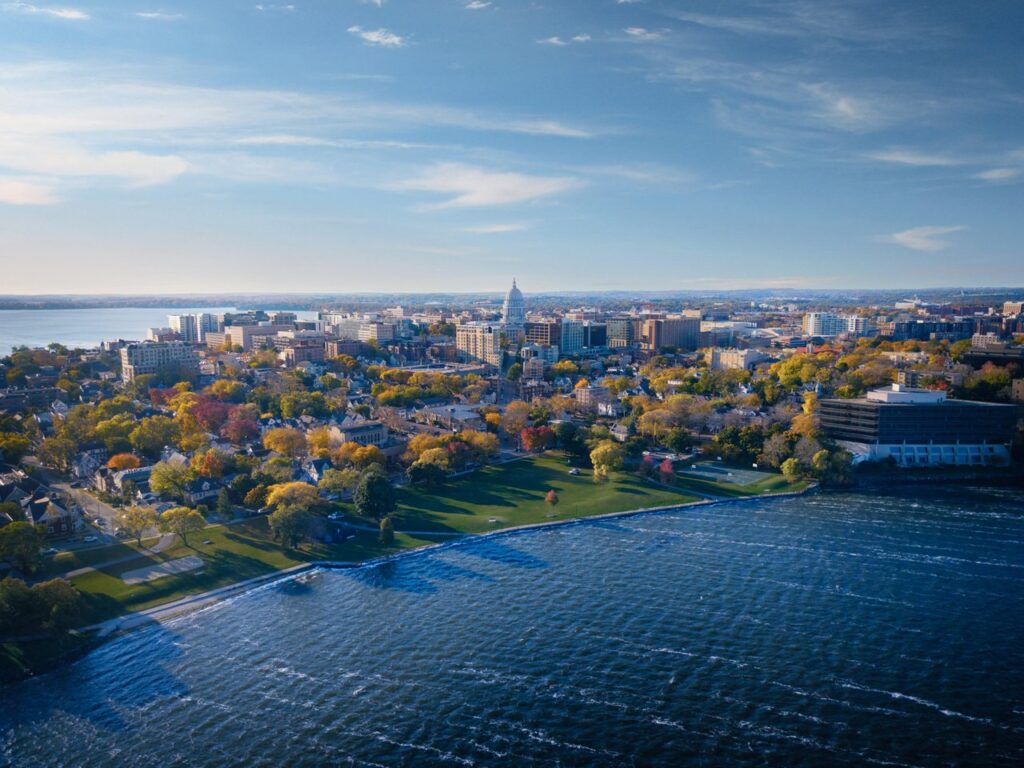
OWAA is kicking off our 100th anniversary celebrations by heading to the midwestern outdoor mecca of Madison, Wisconsin! Save the dates of August 22-24, 2026 (and leave room for some pre- and post-tours too) and plan to join us in The Badger State for the Outdoor Writers Association of American annual conference. The core conference activities will be held in the Monona Terrace Community and Convention Center.
In Madison, Wisconsin, water isn’t on the edge of the experience … it is the experience.
Set on a narrow isthmus between lakes Mendota and Monona, the city’s downtown is defined by its proximity to water in a way few urban environments can rival, with history that predates the Great Pyramids. Step outside a downtown coffee shop, and within minutes you can be on a paddle board. Bike a few miles, and you’ll circumnavigate an entire lake. Follow a wooded path, and you’ll likely emerge onto a quiet shoreline where herons stalk the shallows and the reflection of a sunset shimmers across open water.
Madison’s identity is inseparable from the Yahara Chain of Lakes. Mendota, Monona, Wingra, Waubesa and Kegonsa create a freshwater system that weaves together ecology, recreation, research and daily life. It’s a place where outdoor culture thrives, not in spite of urban life, but because of it.
As Mike Smale, watershed programs specialist with the Clean Lakes Alliance, puts it, “Madison’s Yahara Chain of Lakes is one of the only freshwater systems located in the middle of a metropolitan area in the country. Nowhere else in the country is urban life so proximate to lake life.”
For outdoor writers and adventurers, Madison offers a rare opportunity: to explore a dynamic freshwater landscape where accessibility meets ecological complexity and where every outing—whether paddling at sunrise or walking a lakeshore trail—tells a deeper story about how people connect with water.
A Living, Breathing Watershed
To understand the lakes of Madison is to understand the watershed that sustains them. The Yahara River system connects all five lakes, forming an interconnected network where water (and everything carried within it) moves continuously through the landscape. This connectivity creates both richness and responsibility.
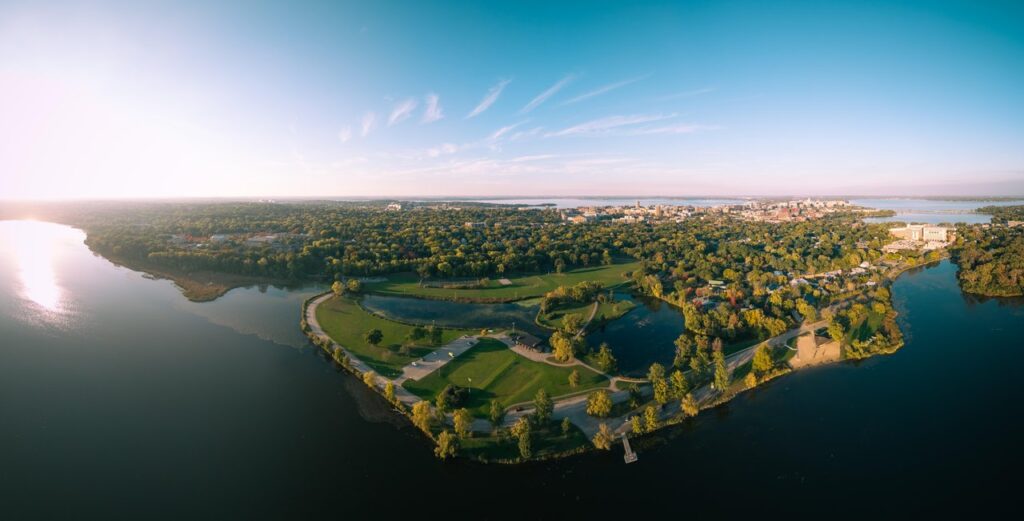
“A lot of work is being done within the watershed to ensure our lakes are healthy and resilient,” explains Smale. “With phosphorus being the primary element impairing the quality of the five lakes, Clean Lakes Alliance works to have everyone work as stewards and reduce negative inputs.”
That stewardship takes many forms. Upstream, agricultural practices like buffer strips and cover crops help reduce nutrient runoff. In the city, efforts such as leaf removal and shoreline restoration play a critical role in protecting water quality. Collectively, these actions demonstrate a shared understanding that the health of Madison’s lakes depends on the choices made both on and off the water.
For visitors, this offers a meaningful opportunity. A trip to Madison is not only about enjoying the lakes but also about witnessing and participating in a community-wide commitment to conservation.
The Deep History
Madison’s relationship with its lakes stretches back thousands of years, a connection underscored by the remarkable discovery of ancient Ho-Chunk canoes preserved beneath the surface of Lake Mendota. Unearthed in recent years, these dugout canoes, crafted from single logs and dating back more than 5,000 years, offer a powerful reminder that the Yahara Chain of Lakes has long served as both a gathering place and vital transportation corridor for Indigenous peoples.
For the Ho-Chunk Nation, whose ancestral lands include this region, the lakes remain deeply significant, holding cultural, spiritual and historical meaning that continues today.
This rare archaeological find doesn’t just add intrigue to Lake Mendota’s already rich scientific legacy; it deepens our understanding of how people have lived with and relied on these waters for millennia, reinforcing that Madison’s lake-centered lifestyle is not a modern phenomenon, but part of a much longer human story.
The Science Beneath the Surface
Madison’s lakes are not only recreational resources—they are globally significant research environments.
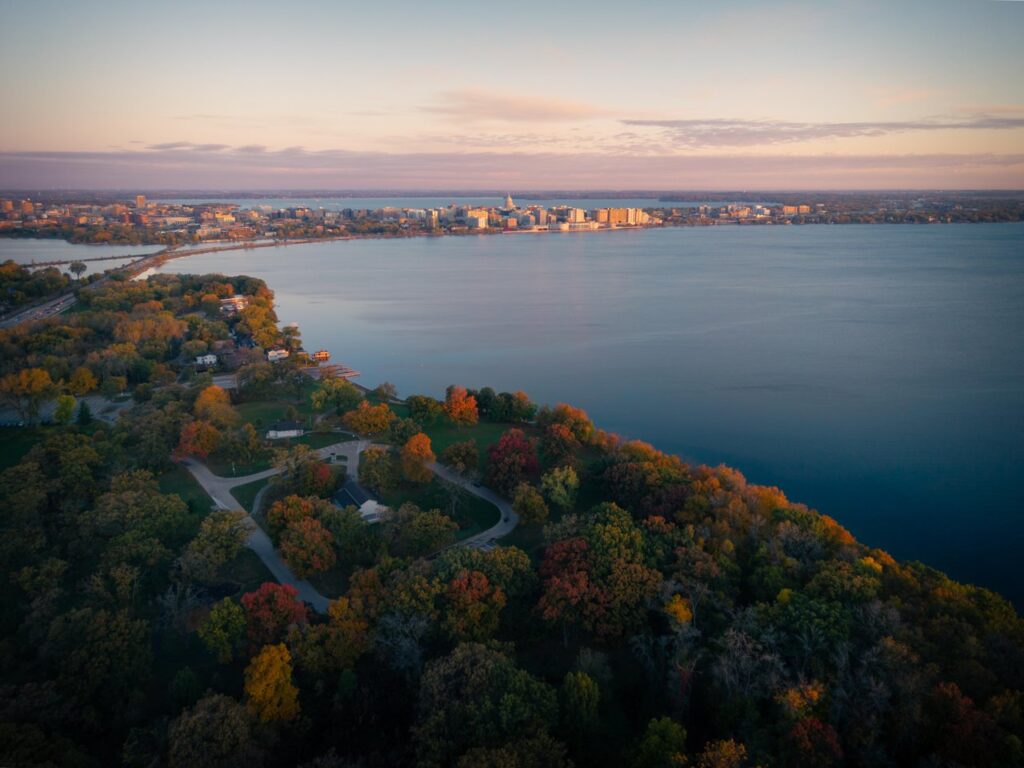
Lake Mendota, in particular, holds a unique distinction and is regarded as the “most-studied lake in the world.” Situated alongside the University of Wisconsin–Madison campus, it has been the focus of continuous scientific study for more than a century.
“UW–Madison is often considered the birthplace of limnology,” says Smale, referring to the scientific study of inland waters. “Lake Mendota has become the setting for thousands of research papers within the limnological field.”
Early pioneers like Edward A. Birge and Chancey Juday laid the foundation for freshwater science here in the early 1900s, establishing Lake Mendota as a living laboratory. To this day, the lake continues to yield insights into everything from nutrient cycling to aquatic ecosystems, with even new species identified within its waters.
For outdoor writers, this scientific legacy adds a compelling layer to any experience on the lake. Every paddle stroke crosses not just a recreational space, but a body of water that has shaped our understanding of freshwater systems worldwide.
A Dynamic System in Motion
Spend enough time on the lakes, and you’ll quickly realize that no two days—or even two locations—are quite the same.
“The lakes are highly dynamic and unique systems,” notes Smale. “At one moment, different lakes—or even different parts of the same lake—may be experiencing very different water quality conditions. There very often is good water conditions somewhere on the five lakes at any given moment throughout the summer.”
This variability is part of what makes the Yahara system so compelling to explore. On a breezy afternoon, waves might roll across Lake Mendota while Lake Wingra remains calm and sheltered, offering a completely different paddling experience. In midsummer, while one shoreline may be affected by algae blooms, another may boast clear, swimmable water.
For those willing to explore, the lakes reward curiosity with constantly shifting opportunities, from wildlife sightings to ideal paddling conditions.
The Heart of Outdoor Life
If the lakes define Madison’s geography, they also define its culture.
“In Madison, the lakes aren’t just scenery … they’re the heart of the city,” says Tyler Leeper, president of Madison Boats. “The state’s capital city is an isthmus with water woven through the geography and throughout our daily life.”
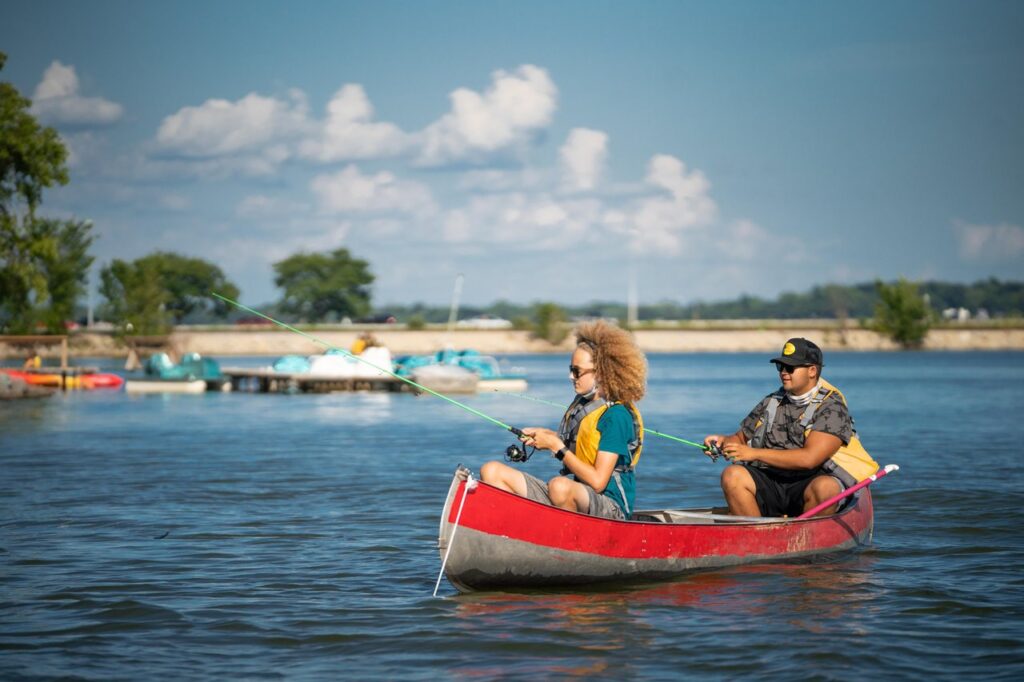
On any given summer day, that reality is easy to see. Kayakers glide past the Capitol skyline. Fishers are at the waterside or in boats casting their rods. Paddle boarders navigate the Yahara River channel. Families gather at waterfront parks, while cyclists trace lake loops that link neighborhoods and green spaces.
This seamless integration of water into daily life creates a uniquely participatory outdoor culture. It’s not uncommon to see commuters paddling to work or entire communities gathering to watch the sun dip below the horizon from the shoreline. The watersports scene is less adrenaline-packed and more about deep connection.
“This isn’t a trend,” Leeper adds. “With the recent discovery of a thousands-year-old canoe, we know it has been the center of our community for over five millennia.”
Choose Your Own Adventure on the Water
Madison’s lakes offer an exceptional range of ways to get outside without ever straying far from the city center. Perhaps the biggest surprise for first-time visitors is how wild the lakes can feel.
“I would say Madison’s watersports scene is more about connection to nature, to each other and to the rhythm of the lakes,” says Leeper. “People are often surprised by how natural and intimate the lakes feel despite being in the middle of a city.”
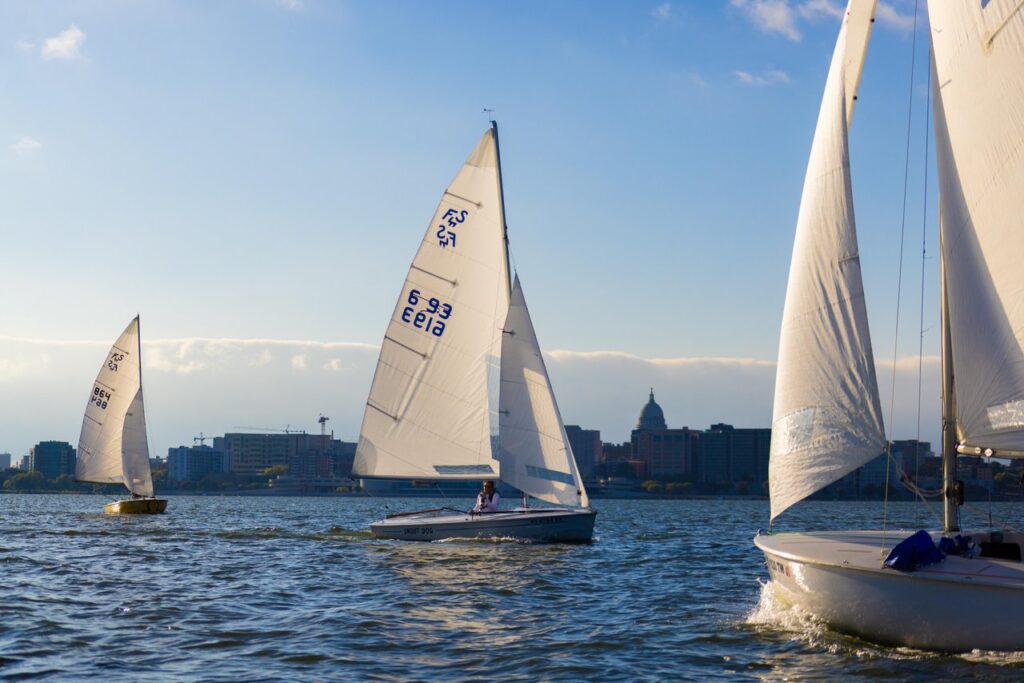
That connection takes many forms. Paddlers might opt for a quiet exploration of Lake Wingra, a smaller, wildlife-rich lake bordered by the UW Arboretum. Others may prefer the broader expanses of Lake Mendota, where pontoon cruises and sailing offer a more social experience. For a mix of urban energy and water-based exploration, Lake Monona provides easy access to downtown views.
For those looking to immerse themselves further, structured experiences abound.
“At Madison Boats, we offer more than 500 paddle craft to rent and hold 110 public events throughout each summer season,” Leeper notes, including full moon paddles, concerts on the water, “Burgers on the Bay” and guided pontoon boat tours. They also offer adaptive boating experiences, ensuring the water is an experience for everyone.
No matter the approach, each outing becomes a story. A story shaped by weather, water conditions and the personal rhythm of the individual on the lake.
“Every day, every outing feels like a ‘choose your own adventure’ experience,” he says. “We love helping first-time paddlers or seriously seasoned paddlers have a wonderful outdoor story to look back on.”
Even beyond the water itself, access to nature is omnipresent. Madison boasts more than 70 lakefront parks, meaning that wherever you are, a shoreline is rarely far away.
For outdoor writers, this juxtaposition—urban setting, wild experience—offers endless narrative potential.
A Four-Season Experience
While summer may be peak season, Madison’s lakes are far from a one-season destination.
Autumn brings a quieter, more contemplative mood, with fall colors reflected in calm waters. Winter transforms the lakes entirely, opening the door to ice fishing, skating and even ice sailing.
“One of Madison’s biggest strengths is that the lakes never really ‘turn off,’” says Leeper. “Monona Bay turns from paddle boards to ice shacks. And in place of stand-up paddle boarding, you will find pick-up ice hockey games happening and ice boats sailing the frozen waves.”
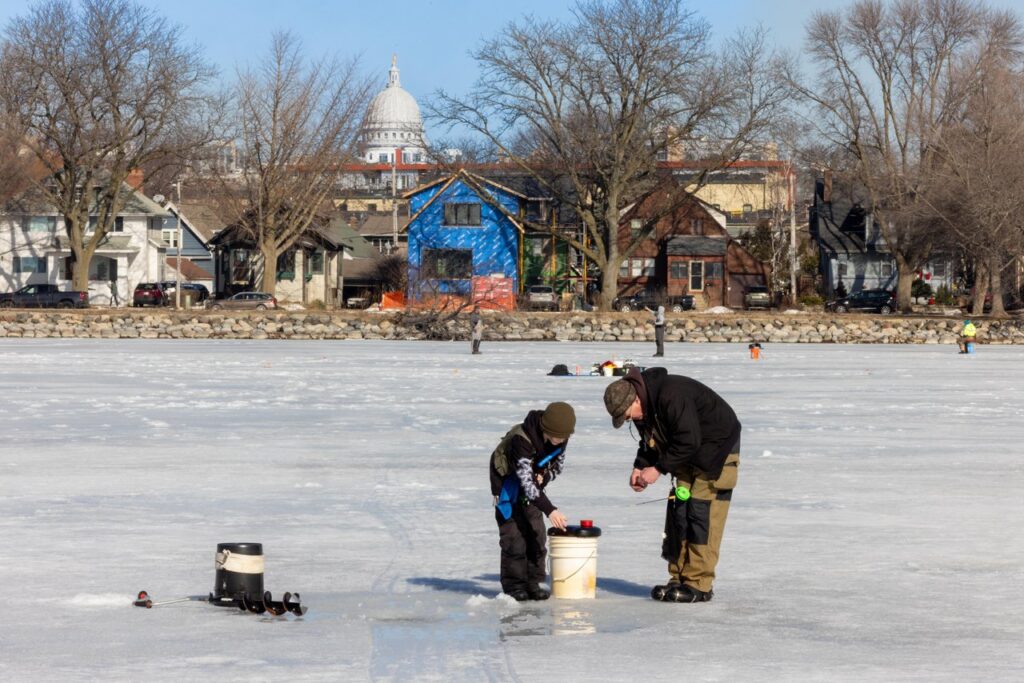
Community events extend onto the ice as well, reinforcing the idea that these lakes are year-round gathering spaces, not just seasonal attractions. Clean Lakes Alliance holds an annual festival on frozen Lake Mendota called Frozen Assets to raise money to continue protecting the area’s waterways.
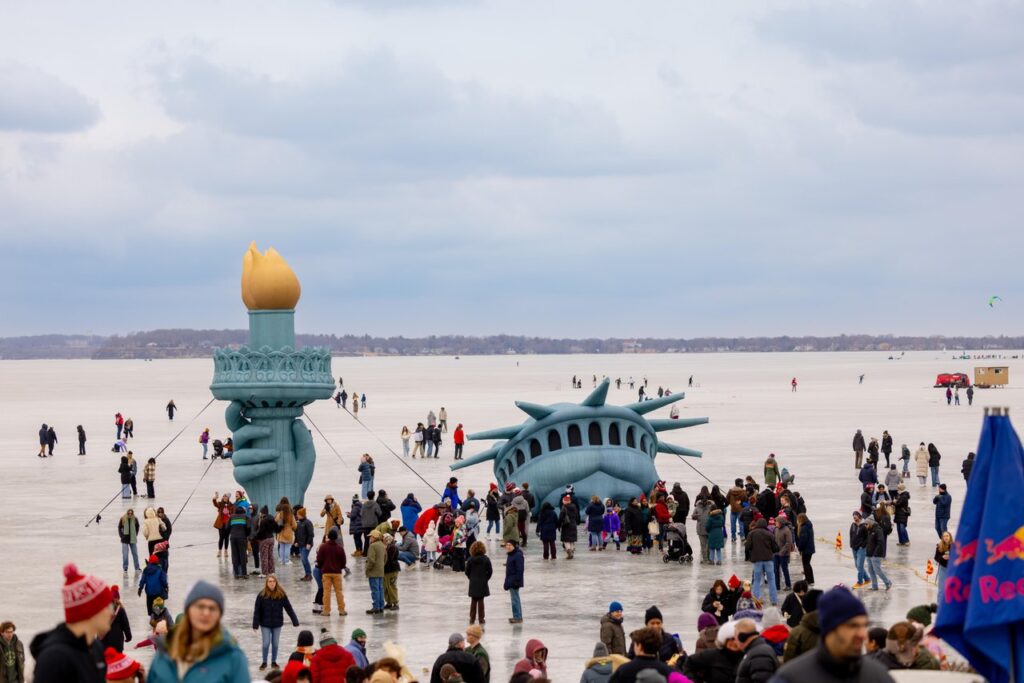
Then spring marks a return to motion, as thawing ice gives way to the first paddlers of the season.
Responsible Recreation
With opportunity comes responsibility. Visitors are encouraged to stay aware of lake conditions, particularly during the warmer months when harmful algal blooms can occur.
“Our lakes occasionally experience harmful algae blooms caused by cyanobacteria,” advises Smale. “These blooms can appear as green or blue-green slicks on the water’s surface and may produce a strong odor. If you suspect there is a cyanobacteria bloom, avoid contact with the water and ensure pets do not drink from this water.”
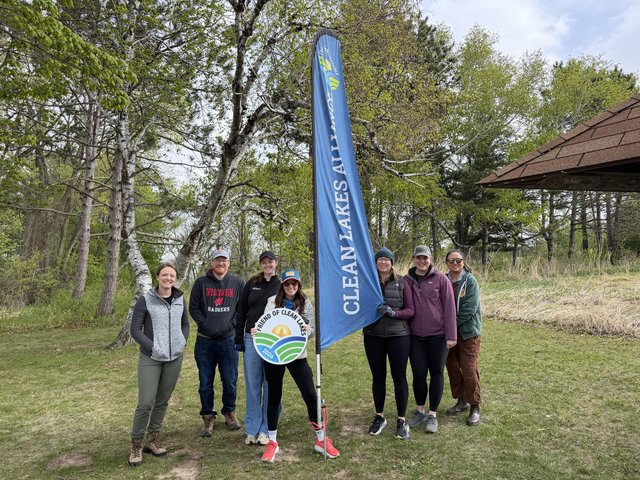
For those looking to give back, volunteer opportunities are abundant. Organizations across the region—from Clean Lakes Alliance to Dane County Parks—offer ways to get involved in restoration and conservation efforts through voluntourism.
“The Madison region has bountiful opportunities to volunteer to help the watershed and the quality of our lakes,” says Smale.
The Future of the Lakes
As Madison continues to grow, the future of its lakes will depend on the continued balance between use and protection.
“The future of our lakes depends on what actions we take today,” says Smale.
The vision is clear: lakes that are swimmable, ecologically healthy and free of harmful algal blooms, ensuring there are places where residents and visitors alike can fully enjoy the water. Beyond environmental considerations, the lakes also play a significant role in the regional economy.
“Economically, the lakes have been found to stimulate over $220 million in annual regional economic activity,” Smale notes, adding that this figure does not capture their cultural and personal value.
Indeed, for many, the true importance of the lakes lies in less tangible benefits: the mental clarity of a morning paddle, the joy of a shared sunset and the sense of place that comes from living in—or visiting—a city so deeply connected to water.
For outdoor enthusiasts, Madison offers countless ways to engage with its lakes, whether actively or passively. A paddle across Lake Monona at sunrise. A bike ride circumnavigating the shoreline. A walk through the Lakeshore Nature Preserve. A relaxed afternoon at the Memorial Union Terrace. Or simply sitting at the water’s edge, watching the interplay of light, wind and movement.
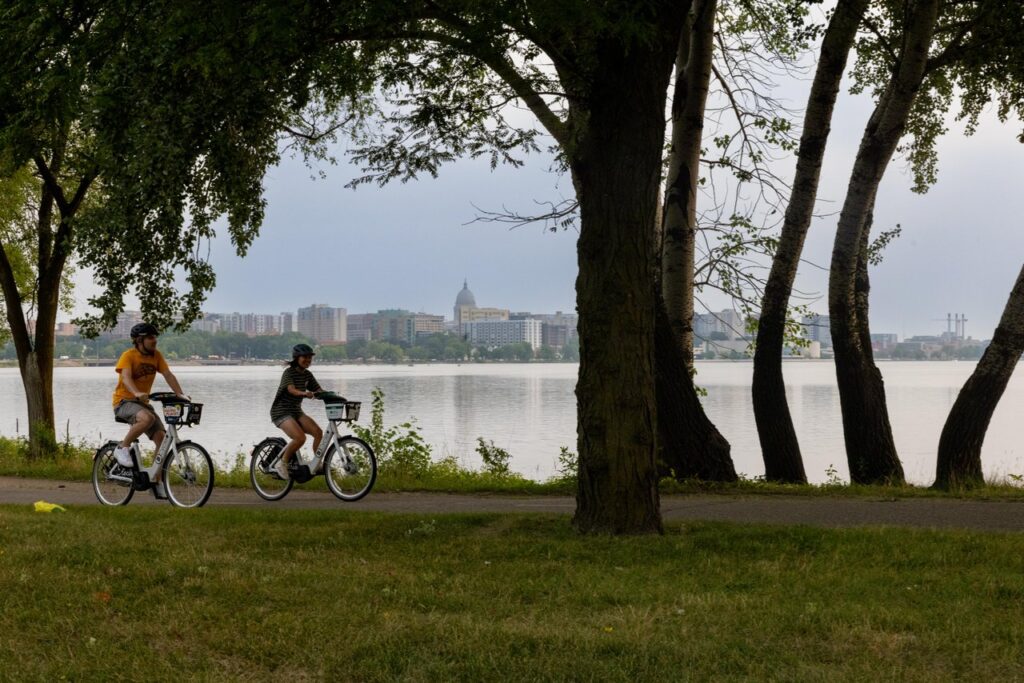
Visitors are highly encouraged to experience the lakes. Because in Madison, the lakes are more than a destination. They are a lens through which to understand a city, a community and an enduring relationship between people and water.